How Facebook Changed the Social Media Landscape and Influenced Today’s Digital World
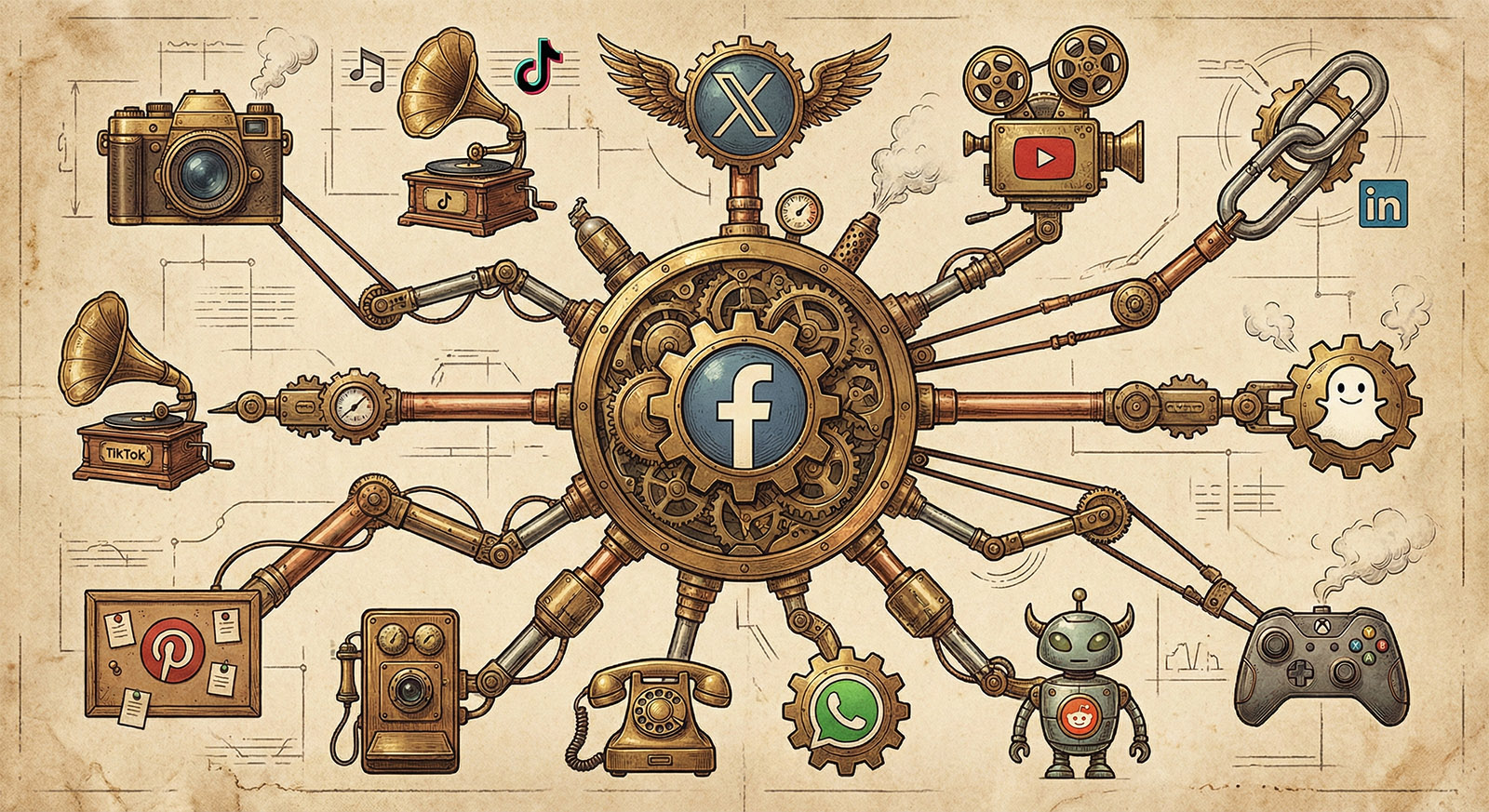
When Mark Zuckerberg launched Facebook from his Harvard dorm room in 2004, few could have predicted it would become the blueprint for the entire social media industry. Two decades later, Facebook remains a titan—but its influence extends far beyond its own platform. From Instagram to Snapchat to TikTok, virtually every modern social network has borrowed heavily from Facebook’s playbook.
In this blog post, we’ll explore how Facebook pioneered the social media landscape, influenced the next generation of platforms, and examine who uses Facebook today.
The Facebook Revolution: How It All Began
Facebook didn’t just create a website—it created a new way for people to connect online. Before Facebook, social media was fragmented across platforms like MySpace, Friendster, and LinkedIn. Facebook changed the game by introducing:
- Real-name culture – Setting the standard for authentic identity online
- The News Feed algorithm – Revolutionizing how content is discovered and shared
- Platform openness – Allowing third-party apps and integrations
- Digital advertising model – Creating the blueprint for targeted marketing
These innovations became the foundation that every subsequent social platform would build upon.
Facebook’s Influence on Modern Social Media
Instagram (Acquired 2012)
Facebook’s $1 billion acquisition of Instagram wasn’t just a business move—it was a masterclass in adaptation. Instagram borrowed Facebook’s core concept of social connection but wrapped it in a visual-first experience. The platform’s evolution mirrors Facebook’s journey: from photo sharing to Stories (inspired by Snapchat), to Reels, and now to a full-fledged shopping platform.
Snapchat and Stories
When Snapchat introduced “Stories” in 2013, Facebook quickly adopted the format across its ecosystem. The ephemeral content format became ubiquitous—Instagram Stories, Facebook Stories, and even LinkedIn Stories all trace their DNA back to Snapchat’s innovation, which was ultimately popularized at scale through Facebook’s distribution.
TikTok and the Algorithm Era
While TikTok revolutionized short-form video, its recommendation algorithm owes a debt to Facebook’s early work on content curation. The “For You Page” concept and engagement-based ranking systems echo the personalized experiences Facebook pioneered.
The Social Media Landscape Today
Today’s social media ecosystem—spanning Instagram, TikTok, Twitter/X, LinkedIn, and emerging platforms—all operate on models Facebook established:
- Freemium models with advertising support
- Social graph networking (connections, friends, followers)
- Algorithm-driven content discovery
- Integration of e-commerce and messaging
Who Uses Facebook Today? Demographics and Statistics
Despite the rise of newer platforms, Facebook remains the most widely used social network globally with nearly 3 billion monthly active users.
Age Distribution
- 25-34 years: Largest demographic segment (24.2% of U.S. users)
- 18-24 years: Nearly 19% of U.S. users
- 35-44 years: Significant portion of the user base
- 45+: Growing segment, with users over 55 representing the fastest-growing age group
Key Statistics
- 62% of Facebook users are under 45 years old
- India leads in total users with 448.1 million monthly active users
- The U.S. has approximately 250 million Facebook users (projected to reach 262.8 million by 2028)
- Men aged 25-34 represent Facebook’s largest global audience
Demographics Overview
Facebook’s user base has matured. While younger users (18-24) spend time on Instagram and TikTok, they still maintain Facebook accounts. The platform now skews toward:
- Adults 25-44 as the core demographic
- Higher-income users compared to some competitors
- Broader geographic distribution including significant rural and suburban penetration
Conclusion
Facebook’s legacy extends far beyond its own platform. It created the playbook for social networking, digital advertising, and platform economics that billions of people interact with daily. While younger platforms like TikTok and Instagram have captured younger audiences, they stand on Facebook’s shoulders—borrowing features, advertising models, and engagement strategies that the social media pioneer perfected.
Today, Facebook remains relevant, particularly among adults 25-44, and continues to evolve. As social media enters the era of AI and immersive experiences, Facebook’s influence will undoubtedly shape the next chapter of digital connection.